Behavioral Analytics Driving Customized Free Spin Allocations Within Online Gaming Environments
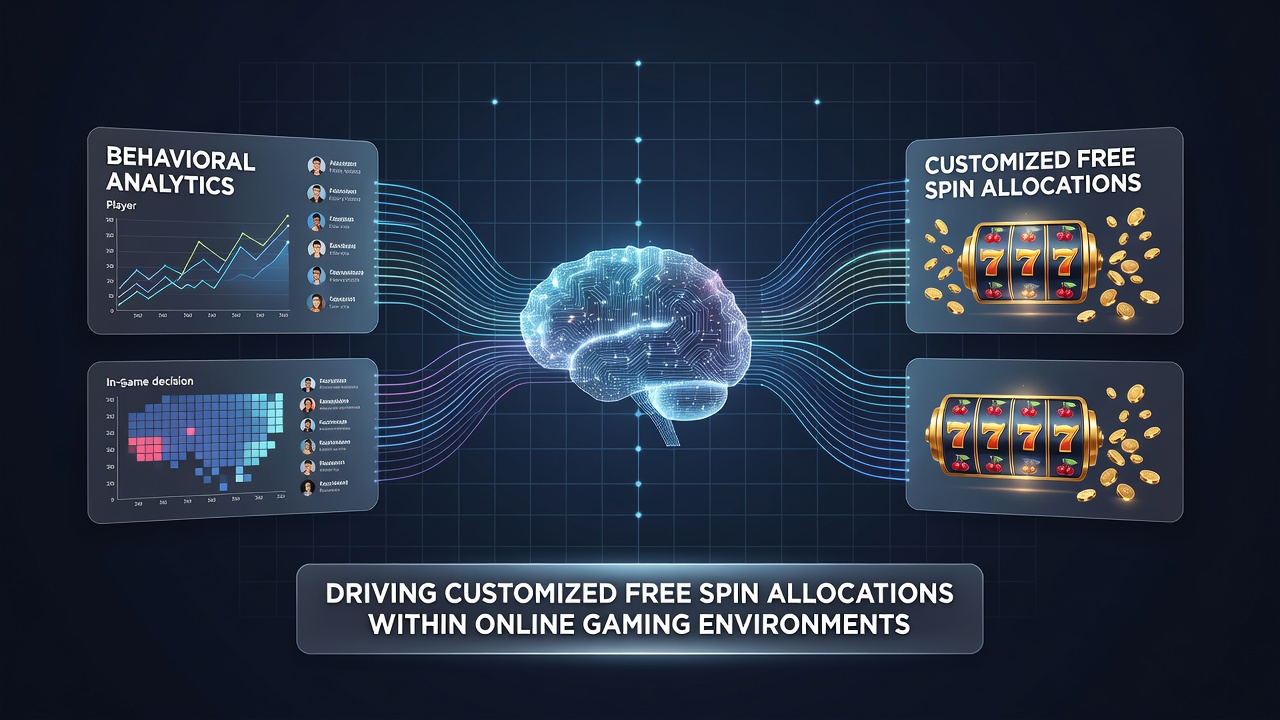
Behavioral analytics has emerged as a core mechanism that online gaming operators apply when determining how many free spins to allocate to individual accounts, and the process begins with continuous collection of interaction data across sessions. Platforms track metrics such as average spin duration, bet size fluctuations, and frequency of bonus feature triggers, then feed those inputs into segmentation models that assign reward tiers without requiring manual intervention from staff.
Data Collection Foundations
Every click, pause, and deposit action contributes to a profile that updates in real time, allowing systems to identify patterns like extended play during specific hours or sudden shifts toward higher volatility games. Researchers at institutions including the University of Nevada, Las Vegas have documented how these granular logs enable operators to distinguish between high-retention players who respond to frequent small allocations and occasional visitors who show stronger engagement after larger, less frequent bundles.
Session length combined with game-type preferences forms one of the primary inputs, yet operators also incorporate device information and geographic signals to refine predictions about when a player is most likely to redeem an offer. In July 2026 several major platforms reported integrating additional layers of telemetry from mobile sensors, which helped correlate physical movement patterns with in-app decision speed and improved the accuracy of spin allocation forecasts by measurable margins.
Segmentation and Allocation Logic
Once profiles are built, clustering algorithms group accounts into categories that receive differentiated free spin quantities, and the logic often rests on expected lifetime value calculations derived from historical redemption rates. A player who consistently completes wagering requirements within a set window might receive an automatic top-up of spins after each qualifying deposit, whereas someone whose activity shows longer gaps could see offers spaced further apart to match observed behavior.
Operators integrate these models with existing loyalty frameworks so that tier advancement and spin customization occur simultaneously, reducing the need for separate promotional calendars. Data from the American Gaming Association indicates that platforms employing such synchronized systems recorded steadier month-over-month retention figures throughout the first half of 2026 compared with those relying on static reward schedules.
Implementation Examples Across Markets
One large European operator adjusted its free spin engine in early 2026 after internal analysis revealed that players logging in from certain time zones responded better to midday allocations than evening ones, prompting the system to shift distribution windows accordingly. Similar adjustments have appeared in North American and Asian markets where local regulatory reporting requires documented proof that reward mechanics do not disproportionately target vulnerable segments.
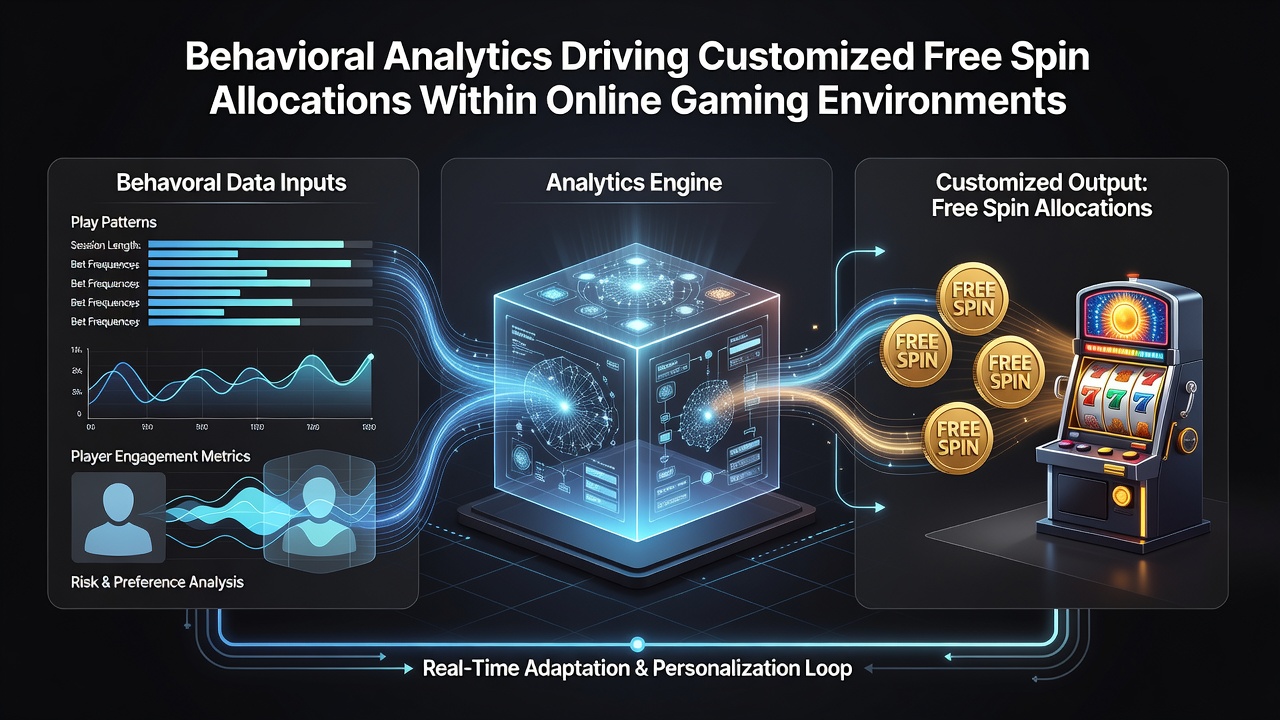
Regulatory bodies such as the Malta Gaming Authority have published guidelines that require operators to maintain audit trails of the behavioral variables influencing each allocation decision, and compliance teams now routinely export model outputs for periodic review. These requirements have pushed developers to build explainability features into the analytics pipelines so that both regulators and players can understand why a particular account received a given number of spins on any specific day.
Impact on Player Engagement Metrics
Studies conducted by independent research firms have tracked how customized allocations affect key performance indicators, and the results consistently show shorter intervals between deposits when spin quantities align with demonstrated preferences. Platforms that refreshed their models quarterly during 2025 and 2026 maintained higher average session values than those operating on annual review cycles, according to aggregated industry data shared at international conferences.
Cross-platform comparisons further illustrate that operators combining behavioral signals with transaction history achieve more precise calibration, reducing instances where unused spins accumulate and expire. This calibration also supports responsible gaming objectives because the same models can flag accounts whose play patterns deviate sharply from established baselines and trigger reduced allocations automatically.
Technical Infrastructure Requirements
Real-time processing demands scalable cloud resources and low-latency data pipelines, while machine learning frameworks must handle both structured logs and unstructured chat or support ticket text that sometimes reveals intent. Vendors supplying these systems have introduced modular components that let operators test allocation rules on isolated player cohorts before full rollout, minimizing unintended effects on overall revenue curves.
Integration points with payment processors and game servers require careful orchestration so that spin credits appear instantly after a qualifying action and remain synchronized across desktop and mobile clients. Failures in this synchronization have led some operators to implement fallback static rules that activate only when primary analytics services experience downtime.
Conclusion
Behavioral analytics continues to refine the way free spins are distributed across online gaming environments by converting observed actions into dynamic allocation rules that update continuously. As data sources expand and regulatory expectations around transparency increase, the underlying models grow more sophisticated yet remain grounded in measurable player patterns rather than fixed promotional calendars. Platforms that maintain rigorous validation of these systems position themselves to sustain engagement levels while meeting compliance standards across multiple jurisdictions.