Charting Regional Regulatory Impacts on Tiered Incentive Structures in Digital Gaming Ecosystems
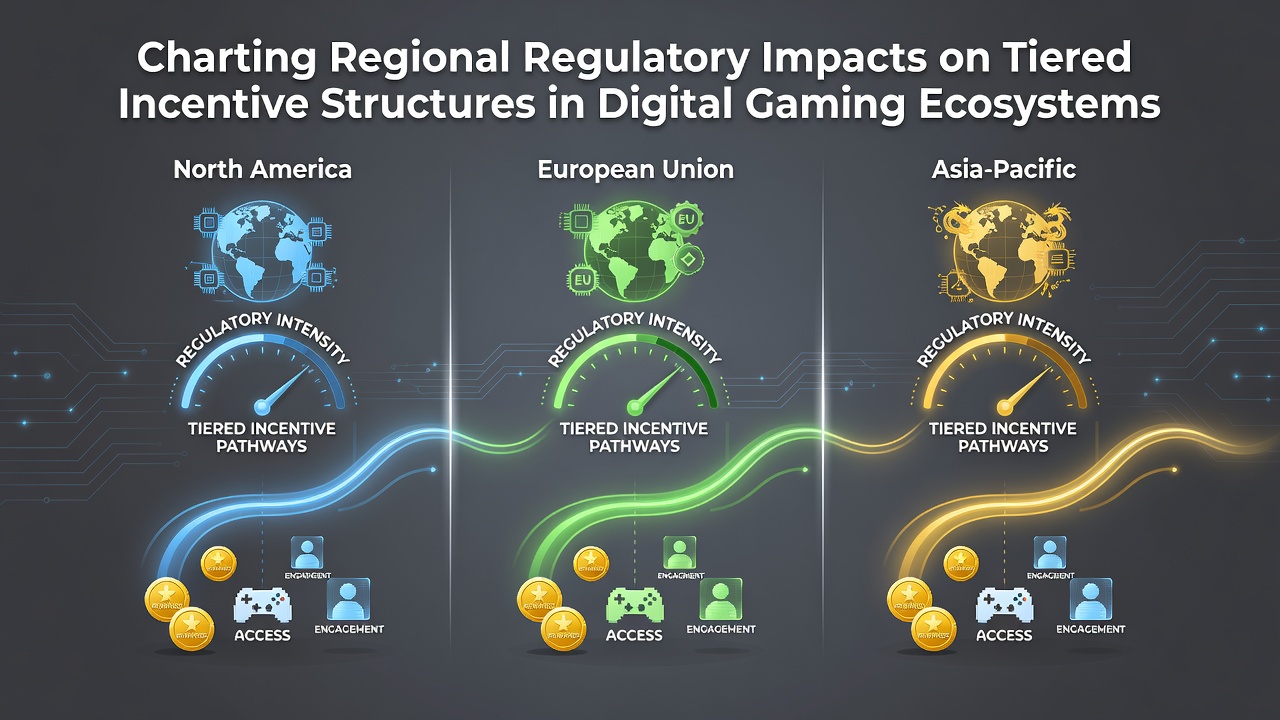
Regional regulations continue to reshape how digital gaming platforms design and implement tiered incentive structures, with variations emerging across North America, Europe, and Asia-Pacific markets as lawmakers adjust rules around bonus accumulation, wagering thresholds, and player loyalty programs. These frameworks determine eligibility for progressive rewards that escalate from entry-level bonuses to premium VIP tiers, and operators must recalibrate their systems whenever new compliance requirements take effect.
North American Variations Shape Tier Progression Rules
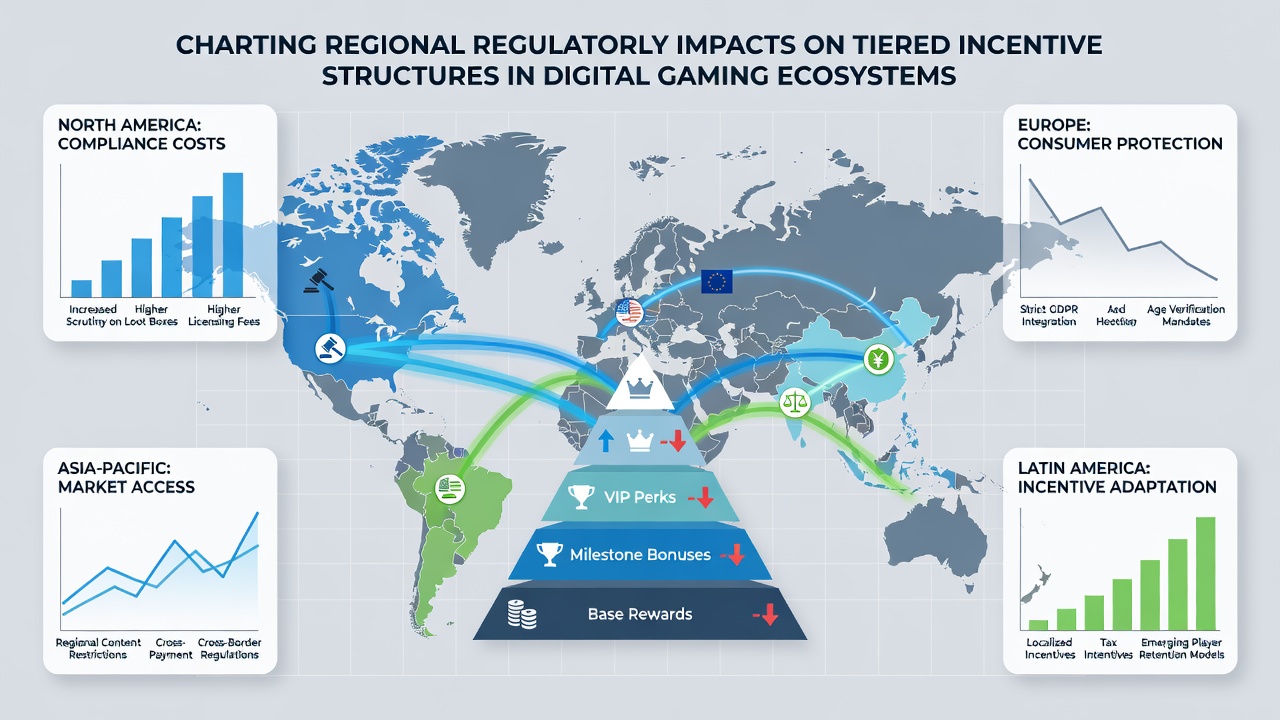
State-level oversight in the United States produces distinct patterns for incentive layering, where New Jersey's Division of Gaming Enforcement requires clear disclosure of all tier advancement criteria while limiting the speed at which players can unlock higher reward brackets through deposit matching. Operators active in multiple jurisdictions therefore maintain separate tracking modules that adjust point accumulation rates according to each state's cap on promotional value relative to actual gameplay. Data from the first half of 2026 shows these segmented systems now handle over 40 percent more compliance checks than equivalent platforms recorded two years earlier.
Canadian provincial regulators add another layer of complexity, since Ontario's iGaming framework mandates that tiered rewards tied to cryptocurrency deposits must pass independent audits before activation. This requirement has prompted several platforms to introduce delayed unlocking sequences for mid-level incentives, ensuring that higher-tier benefits only become available after players complete verified transaction histories spanning multiple weeks.
European Compliance Standards Influence Reward Scaling
Across the European Union, the directive on consumer protection in online gambling has driven operators to cap the maximum value of any single tier jump, which in turn compresses the gap between consecutive loyalty levels. Platforms operating under Maltese or German licensing must now publish standardized formulas that calculate how deposit volume translates into tier status, removing discretionary multipliers that previously allowed rapid advancement for high-volume users. Research published by the European Gaming and Betting Association in early 2026 documents a 27 percent reduction in the average number of active tiers offered by major operators compared with pre-directive structures.
These constraints also affect cross-border play, because users accessing services from different member states encounter incentive structures that automatically adjust based on their registered location. The result appears in unified dashboards that display region-specific progression bars rather than a single global ladder.
Asia-Pacific Markets Introduce New Threshold Mechanisms
Australian state authorities have begun requiring operators to tie tier advancement directly to verified loss thresholds rather than deposit totals alone, a shift that alters how loyalty points accrue for players in New South Wales and Victoria. Platforms must now integrate real-time loss-tracking APIs that feed into tier algorithms, preventing the creation of artificial advancement through repeated small deposits without corresponding play activity. Figures released by the Australian Communications and Media Authority indicate that such rules took effect for most licensed operators by June 2026, forcing several international brands to rebuild their entire reward engines for the region.
In parts of Southeast Asia, emerging frameworks focus on transparency around cryptocurrency-linked tiers, where regulators demand that operators separate fiat and digital-asset reward pools. This separation creates parallel progression tracks that players must navigate independently, with conversion between the two prohibited once a tier level has been assigned.
Technical Adaptations and Data Management Requirements
Operators respond to these fragmented rules by deploying modular incentive engines capable of swapping rule sets based on user geolocation at login. Backend systems now log every tier status change with jurisdiction-specific timestamps, creating audit trails that satisfy simultaneous oversight from multiple agencies. Industry reports note that maintenance windows for these systems have increased by roughly 18 percent since 2024 as developers add new conditional branches for each regulatory update.
Player segmentation tools also evolved, because demographic filters must now exclude certain reward types for users located in jurisdictions that ban accelerated tier progression through bonus wagering. The technical overhead includes maintaining separate eligibility matrices that update automatically whenever a new statute or amendment is published.
Conclusion
Regional regulatory divergence continues to drive specialization in how digital gaming platforms structure their tiered incentives, producing a landscape where identical gameplay can yield different reward pathways depending solely on the user's location. As more jurisdictions finalize rules scheduled for implementation after June 2026, operators maintain active monitoring programs to ensure their systems remain compliant while preserving the core mechanics that encourage sustained engagement across all player segments.