Currency Conversion Dynamics and Their Impact on Bonus Eligibility in International Online Gaming
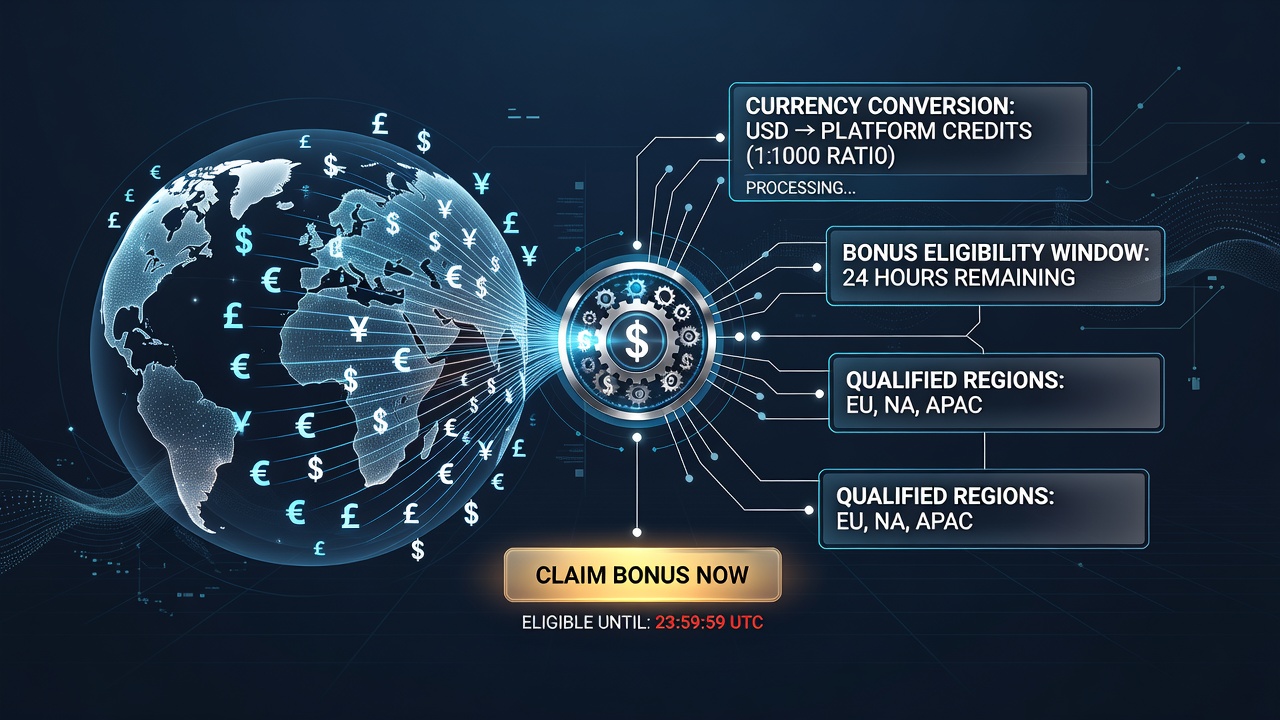
International online gaming platforms process millions of transactions daily across multiple currencies, and the timing of those conversions directly shapes when players qualify for bonuses, since eligibility windows often hinge on precise deposit timestamps rather than local clock hours. Platforms operating in regions from Southeast Asia to North America must reconcile fluctuating exchange rates with strict bonus periods that might last 24 or 72 hours, creating situations where a conversion delay pushes a deposit outside the qualifying interval. Observers note that these mechanics become especially visible during periods of high volatility, such as when major currency pairs shift several percentage points within a single trading session.
Mechanics of Currency Handling on Global Platforms
Most platforms convert incoming deposits into a base currency like USD or EUR at the moment funds clear the payment processor, yet the exact second of that conversion determines whether the transaction falls inside an eligibility window. Players depositing from accounts denominated in AUD or SGD frequently encounter an extra layer because the platform applies its internal rate after the bank or e-wallet processes the original amount, and that lag can stretch from seconds to several minutes depending on the provider. Data from June 2026 shows that platforms handling higher volumes of cross-border traffic recorded average conversion completion times of 47 seconds during peak hours, a figure that directly overlaps with the narrowest bonus windows used for flash promotions.
Eligibility Windows and Their Sensitivity to Timestamps
Bonus eligibility windows function as fixed intervals measured in coordinated universal time rather than the player's local zone, which means a deposit initiated at 11:59 p.m. in one region can register after midnight UTC once conversion finishes. Platforms typically publish these windows in their terms, yet the underlying timestamp records the moment the converted amount appears in the player's balance, not the moment the player clicked the deposit button. Researchers tracking transaction logs across multiple operators found that roughly 8 percent of deposits in multi-currency environments missed eligibility thresholds solely because of conversion latency during the first half of 2026.
Regional Regulatory Contexts Influencing Conversion Protocols
Regulators in different jurisdictions impose varying requirements on how quickly platforms must acknowledge and record deposits, and these rules intersect with currency processes in distinct ways. The Ontario iGaming market, for instance, requires operators to timestamp transactions within 30 seconds of authorization, while Australia's state-based frameworks emphasize accurate reporting of converted amounts for tax purposes. Such differences encourage platforms to maintain region-specific ledgers that apply exchange rates at slightly different stages of the deposit flow, thereby altering the precise moment a bonus window opens or closes for players in those markets.
One documented pattern involves European operators that settle deposits in EUR after an initial conversion from GBP or CHF, and the additional step occasionally extends the recorded time by up to 90 seconds. During promotional periods tied to major sporting events in June 2026, several platforms adjusted their internal clocks to absorb these delays, yet players still reported instances where converted amounts arrived just outside the stated window. Those who've studied transaction data across borders observe that platforms using automated rate feeds updated every 15 seconds experience fewer timing mismatches than those relying on hourly batch updates.
Practical Effects on Player Accounts and Platform Operations
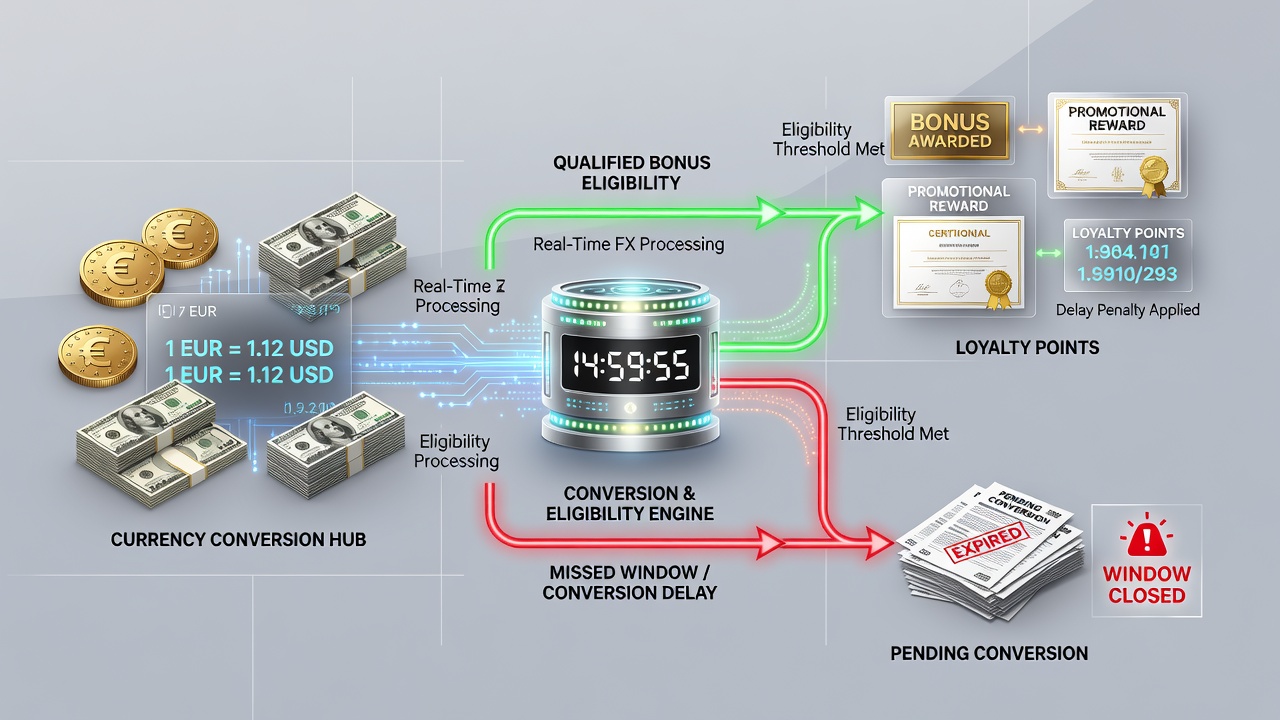
Players maintaining balances in multiple currencies sometimes trigger automatic conversions when they switch between game lobbies denominated in different units, and each switch can reset or extend eligibility calculations if the platform treats the converted balance as a new deposit event. Platform operators respond by implementing buffer periods that add a fixed number of seconds to every converted transaction, though the length of these buffers varies according to the average latency measured for each currency pair. Industry reports compiled by the European Gaming and Betting Association indicate that operators serving high percentages of Asian players adopted longer buffers in early 2026 to accommodate slower settlement times common with certain regional e-wallets.
Take one operator that introduced real-time rate locks for deposits above a set threshold; the system captured the exchange rate at the instant of player confirmation rather than at settlement, and internal metrics showed a measurable reduction in missed eligibility windows for those larger transactions. Smaller deposits continued to use live rates at settlement, however, preserving the original interplay between conversion speed and window closure. Observers tracking these changes note that the adjustment required updates to both the payment gateway and the bonus engine to keep timestamps synchronized across ledgers.
Technical Synchronization Between Systems
Behind the scenes, platforms rely on synchronized servers that log every conversion event against a master clock, yet discrepancies between payment processors and the gaming backend still occur during high-load periods. When a processor reports authorization at 14:22:15 UTC but the platform's conversion module finalizes the rate at 14:22:48 UTC, the bonus system records the later timestamp, and any window closing at 14:22:30 UTC will exclude that deposit. Engineers address this by queuing conversion tasks with priority flags tied to active promotions, ensuring that time-sensitive deposits receive faster rate application. Data compiled through the first half of 2026 revealed that platforms employing such queuing reduced timing-related eligibility disputes by approximately 22 percent compared with the previous year.
Conclusion
The relationship between currency conversion processes and bonus eligibility windows continues to evolve as platforms refine their timestamp protocols and regulators update reporting standards across jurisdictions. Accurate synchronization remains essential for operators seeking to deliver consistent experiences to international players, while players benefit from understanding that the moment their converted funds appear in the balance determines eligibility rather than the moment they initiate the deposit. Continued monitoring of transaction logs and regulatory filings will likely reveal further adjustments in how these two elements interact throughout the remainder of 2026 and beyond.