Tracing Synchronization Between Live Event Timelines and Layered Reward Unlocks Across App-Driven Wagering Networks
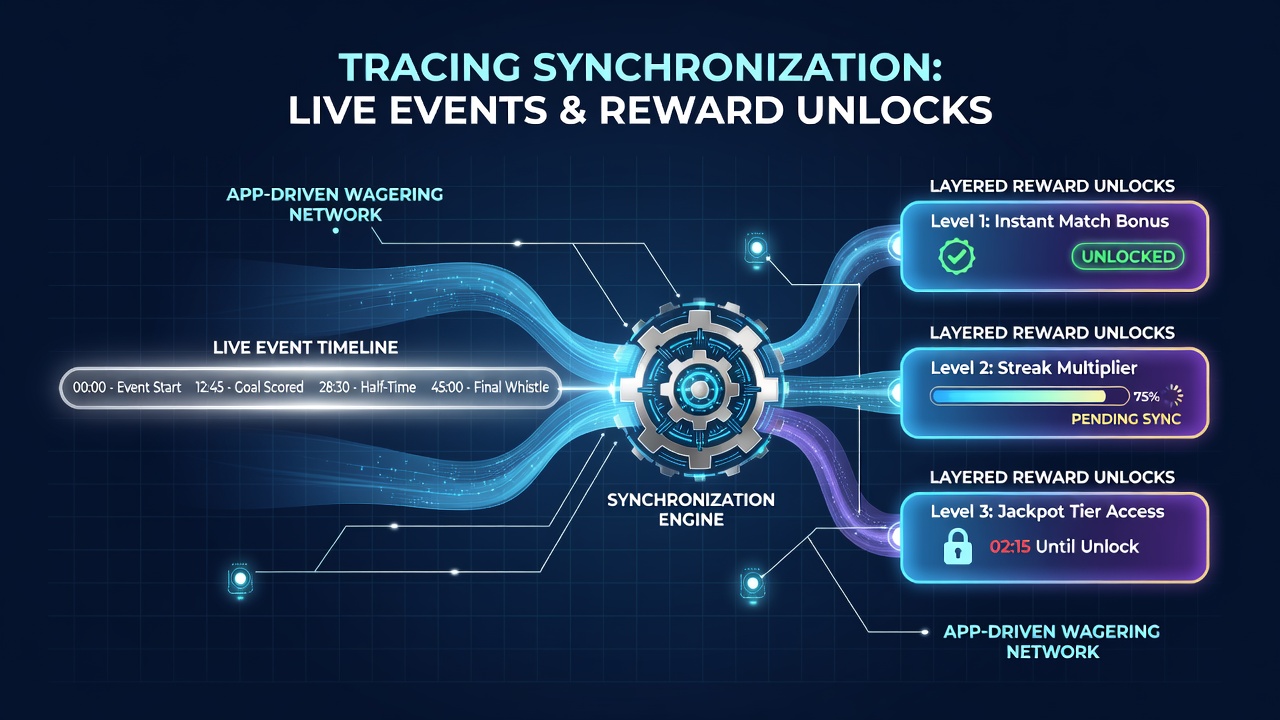
App-driven wagering networks now coordinate live event timelines with multi-tier reward systems through precise data pipelines that track real-time occurrences and trigger incremental unlocks, and observers note how these mechanisms rely on timestamped event feeds combined with user activity logs to maintain alignment across distributed mobile platforms. Developers integrate application programming interfaces from sports data providers directly into backend servers, which allows reward sequences to advance automatically when specific milestones occur during ongoing matches or races.
Core Components of Timeline Integration
Live event timelines consist of structured data streams that capture start times, scoring updates, and period transitions in sports or gaming sessions, while layered reward unlocks operate on separate but connected logic trees that release bonuses, free bets, or cashback increments at predetermined thresholds. Synchronization occurs when server-side scripts compare incoming event markers against stored player progress metrics, and this process ensures that a goal scored in the 45th minute of a soccer match can immediately advance a user from one reward tier to the next without manual intervention. Platforms achieve this coordination through event-driven architectures where message queues handle high volumes of updates, preventing delays that might otherwise break the connection between on-field action and in-app progression.
Technical Mechanisms Driving Alignment
Engineers deploy time-synchronization protocols such as network time protocol adjustments alongside custom latency compensation algorithms to account for varying mobile network conditions across regions, and these tools keep reward triggers responsive even during peak traffic periods. Data packets carrying live updates receive priority routing within the network infrastructure, which lets reward calculations execute within milliseconds of confirmed events. Several networks incorporate blockchain elements for immutable logging of both timeline events and unlock transactions, creating audit trails that satisfy compliance requirements from multiple jurisdictions.
Regional Implementation Patterns Observed in 2026
Analysts tracking North American markets report expanded adoption of these synchronized systems following regulatory updates in various states, whereas European operators have focused on cross-border data handling standards that maintain consistency for users traveling between countries. In June 2026 industry reports highlighted increased deployment of edge computing nodes near major sporting venues to reduce transmission delays between live feeds and reward engines. One study released by the University of Nevada, Reno examined synchronization accuracy rates across ten major platforms and found median alignment windows under 800 milliseconds during high-profile events.
Layered Reward Structures and Trigger Conditions
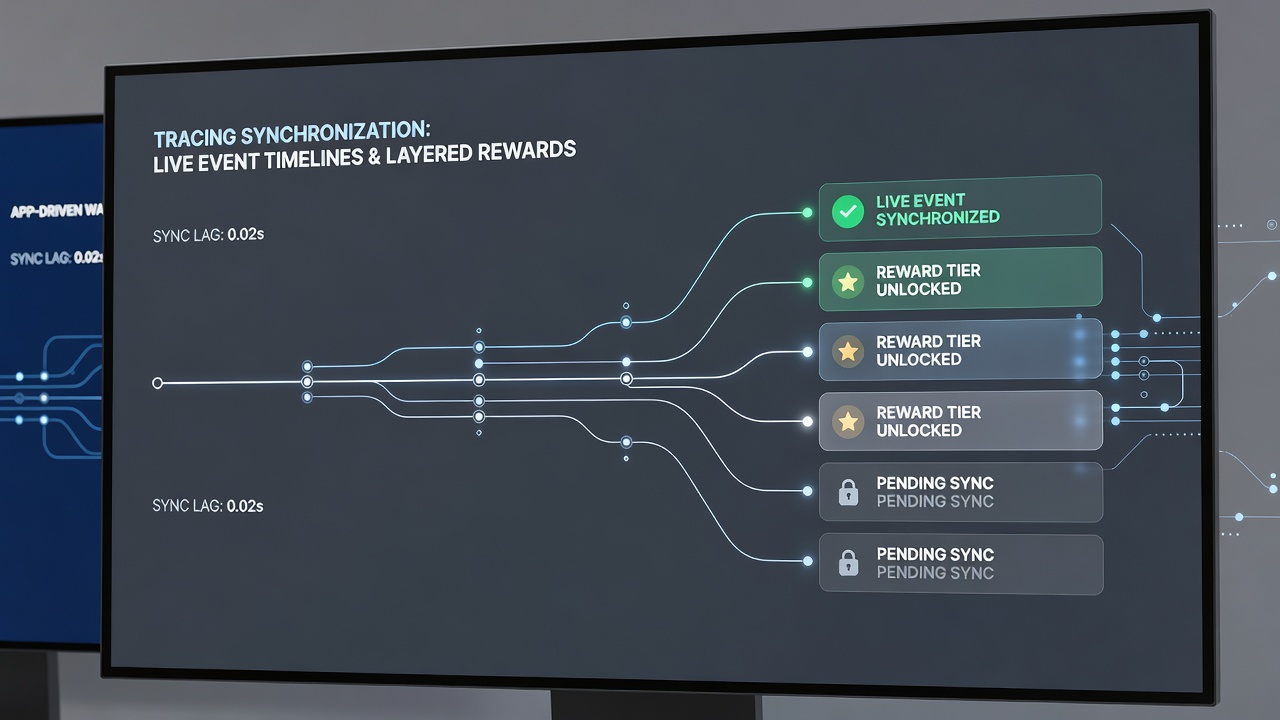
Reward layers typically progress from entry-level engagement bonuses through mid-tier accumulation stages to premium loyalty multipliers, with each level tied to cumulative metrics such as total stake value or event-specific achievements like correct score predictions. Triggers activate only after verification routines confirm both the live event outcome and the user's qualifying actions within the same temporal window, and this dual-check approach reduces erroneous payouts. Observers have documented cases where platforms adjust layer thresholds dynamically based on aggregated user behavior patterns collected over preceding weeks, allowing networks to balance engagement incentives against operational costs.
Data Flow and Verification Processes
Information travels from external sports data aggregators through secure APIs into centralized processing hubs that apply business rules before distributing outcomes to individual user profiles, and parallel verification steps cross-reference multiple independent data sources to confirm event accuracy. When discrepancies arise between feeds, systems default to the most recent consensus timestamp, preserving reward integrity. Mobile applications cache partial timeline data locally to maintain visual feedback during brief connectivity interruptions, yet final unlock confirmations always route through server validation to prevent tampering.
Industry associations such as the Gaming Laboratories International have published testing frameworks that evaluate synchronization reliability under simulated network stress, providing operators with standardized benchmarks. Separate research conducted by Australian academic groups has explored how these same pipelines adapt to different wagering formats including virtual sports simulations that run on accelerated timelines.
Challenges in Maintaining Consistent Synchronization
Variable latency across global user bases creates occasional drift between event occurrence and reward visibility, prompting ongoing refinements in predictive buffering techniques that anticipate upcoming milestones. Regulatory frameworks in several Canadian provinces now require documented latency thresholds for any system linking live data to financial outcomes, and operators respond by publishing quarterly performance metrics. Scalability remains a focus area as simultaneous events across multiple sports increase concurrent data loads, leading networks to adopt containerized microservices that scale independently for timeline ingestion versus reward distribution.
Conclusion
Tracing synchronization between live event timelines and layered reward unlocks reveals tightly coupled technical and operational systems that continue evolving with advances in data transmission and compliance standards, and continued monitoring of these networks shows steady improvements in alignment precision across app-driven wagering environments. Future developments are expected to incorporate additional sensor inputs from venues and enhanced machine learning models for predictive reward staging.